



12/06/2001
LUUG 29/11/2000 Hidden Footprints
12
DNP-2000-19-9
WWW & CDNP
lHTTP:
–access mechanism
–TCP
lClient-server:
–proxy arrangement possible
lClient-side cache:
–speeds up multiple access to same page
lProxy cache:
–multiple hosts on same network
cache
browser
server
cache
proxy
browser
server
cache
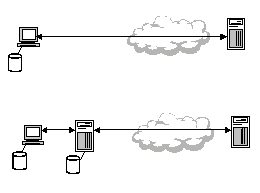
HTTP is an application-level protocol intended to have the lightness and speed necessary for distributed, collaborative, hypermedia information systems. HTTP has been in use by the World-Wide Web global information initiative since 1990. A client-server model is assumed. Access may be direct from client to server or via a proxy. In both cases the browser will probably operate a client side cache. This is a temporary store of the most recently accessed resources. Frequently these will need to be referred to again soon and keeping a cached copy will avoid the need for another (possibly slow) transfer from the remote server. Sites with many hosts may operate a local proxy system. The browsers on such sites make their requests via the proxy which then caches the results. Given that many requests from a site will be for a common set of resources this arrangement serves to keep many access local to a site where traffic is, presumably, over a high-speed LAN.
HTTP operates over a TCP connection. The need to set up and clear down a TCP connection for each resource request (every separate item on a page!) in HTTP v1.0 does rather militate against the intended “lightness and speed”. However, this will be remedied in HTTP v1.1. Once the TCP connection is open the HTTP dialogue consists of a request and response encoded, in the main, as phrases of ASCII text.